Letters from a Dermatologist · Sun Care
How Do You Choose a Good Sunscreen?
Mineral or chemical? Which ingredients should you skip? And is chemical sunscreen actually bad for your skin?

What Makes a Sunscreen Good?
Dermatologists usually recommend a sunscreen that says "broad spectrum," has an SPF of 30 or higher, and is water resistant. Broad spectrum means it protects against both UVA and UVB rays.
Water resistance has a time limit. In the U.S., labels must say whether the sunscreen stays effective for 40 or 80 minutes while you swim or sweat. Of course, no sunscreen is truly waterproof.
And here's the most important part: pick a texture you like. If it feels uncomfortable, you won't keep using it. The best sunscreen is the one you'll use again and again.
Mineral or Chemical: Which Should You Use?
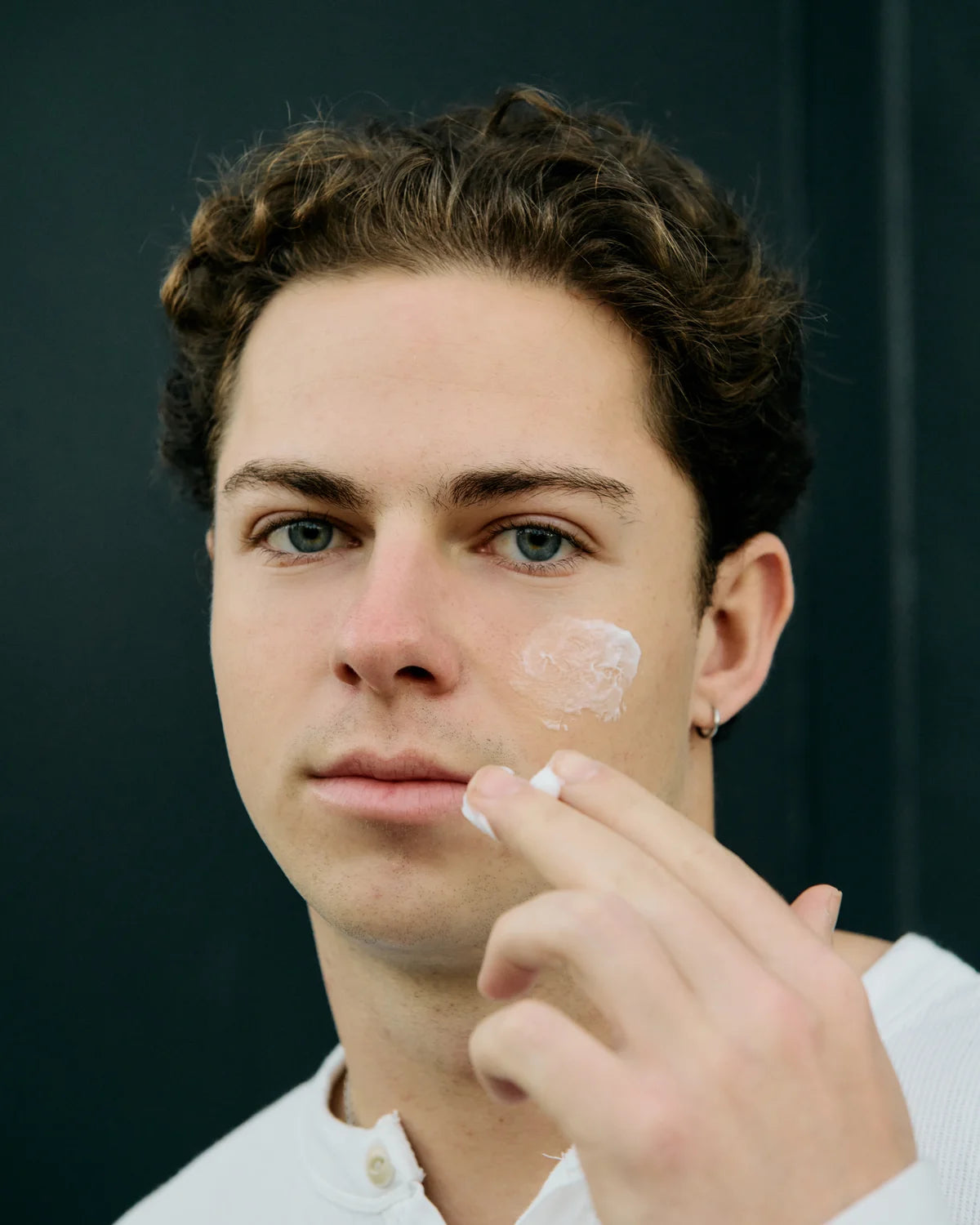
Either one can protect you well. Mineral sunscreens use zinc oxide, titanium dioxide, or both. Chemical sunscreens use other filters, such as avobenzone or octocrylene. Mineral filters are often described as reflecting or scattering UV, but in lab measurements the two minerals reflected only about 4–5% of UV light on average and absorbed most of the rest. So both types work mainly by absorbing UV light.
Both mineral and chemical sunscreens sold in the U.S. are made with FDA-listed ingredients, and neither type has been shown to be harmful to human health. Dermatologists often suggest mineral formulas for sensitive skin because of irritation and allergy. Some chemical filters can irritate skin or cause an allergic reaction, while zinc oxide and titanium dioxide tend to be gentler and rarely show up in allergy reports. That said, chemical sunscreens have come a long way on their old weak points. Filters that hold up in sunlight while blocking both UVA and UVB are now in use, and newer chemical filters have rarely been reported to cause photoallergy, an allergic reaction triggered by sunlight. The white cast a mineral sunscreen can leave comes from its particles reflecting visible light, and formulas with much finer particles reduce it. So instead of the type, choose a formula that feels comfortable on your skin.
Three Things to Try
- Read the Active Ingredients box. If neither zinc oxide nor titanium dioxide is listed, it's a chemical sunscreen. If either one is there, it's a mineral sunscreen or a blend that also uses chemical filters.
- Reapply at least every two hours. Reapply sooner if you've been sweating or swimming: a water-resistant label means the SPF was tested to hold through 40 or 80 minutes of water, so reapply after that and right after toweling off. Sitting still, sunscreen wears off slowly; sweat and water wash it away much faster.
- Add shade and a hat. Use a wide-brimmed hat and sunglasses to give your skin some shade.

Keep Reading